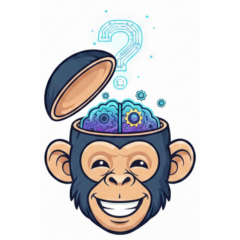
You believe your opinions are rational.
They aren’t.
None of ours are.
Your brain uses shortcuts — called cognitive biases — to make fast decisions. These shortcuts help you survive. But they also distort reality.
Here are seven biases shaping your thinking right now.
1. Confirmation Bias
You seek information that confirms what you already believe.
You ignore contradictory evidence.
This is why:
- Political debates go nowhere
- Smart people stay wrong
- Echo chambers thrive
The cure: Actively search for disconfirming evidence.
2. Availability Heuristic
If you can easily recall an example, you assume it’s common.
Plane crashes feel frequent.
They aren’t.
Social media amplifies extreme events.
Your brain overestimates their probability.
The cure: Ask for base rates and statistics.
3. Anchoring Bias
The first number you see influences your judgment.
A €1,000 product discounted to €499 feels cheap.
Even if €499 is still expensive.
The first idea shapes the conversation more than it should.
The cure: Reset and evaluate independently.
4. Halo Effect
If someone is attractive, successful, or charismatic, you assume they are competent in unrelated areas.
Confidence is mistaken for expertise.
The cure: Separate traits. Evaluate evidence.
5. Sunk Cost Fallacy
You continue investing because you’ve already invested.
Time.
Money.
Emotion.
Instead of asking:
“What is the best decision now?”
You ask:
“How do I justify my past?”
The cure: Ignore past costs. Optimize forward.
6. Overconfidence Bias
Most people think they are above average.
Statistically impossible.
Overconfidence leads to:
- Bad investments
- Failed startups
- Poor risk assessment
The cure: Assign probabilities. Track predictions.
7. Emotional Reasoning
“If I feel it, it must be true.”
Emotions inform.
They do not prove.
The cure: Separate feeling from evidence.
Awareness Is the First Step
You cannot eliminate bias.
But you can detect it.
And detection changes decisions.
Critical thinking is not about being smarter.
It’s about being less wrong.
That’s the edge.